Hey there! I’m a supplier of deep drawn parts, and today I wanna chat about the joining techniques for these parts. Deep drawn parts are super useful in a bunch of industries, from automotive to electronics. And getting the right joining technique is crucial for making sure these parts work well and last long. Deep Drawn Parts
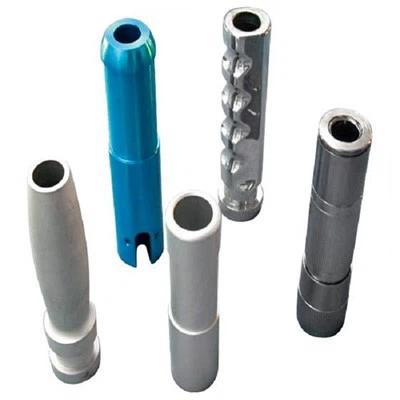
Let’s start with one of the most common methods: welding. Welding is a great way to join deep drawn parts because it creates a strong, permanent bond. There are different types of welding, like spot welding and seam welding. Spot welding is quick and easy. You just apply heat and pressure at specific points to join the parts together. It’s often used when you need to join thin sheets of metal. Seam welding, on the other hand, creates a continuous weld along a seam. This is great for making leak – proof joints, which is really important in things like fuel tanks or fluid – carrying components.
Another popular joining technique is soldering. Soldering uses a filler metal with a low melting point to join the parts. It’s not as strong as welding, but it’s great for joining small, delicate parts. In the electronics industry, soldering is used all the time to connect components on printed circuit boards. The nice thing about soldering is that it doesn’t require as much heat as welding, so it won’t damage sensitive parts.
Adhesive bonding is also a cool option. You can use adhesives to join deep drawn parts, and it has some advantages. Adhesives can distribute stress evenly across the joint, which can help prevent cracking. They can also be used to join different types of materials, like metal and plastic. And they’re great for creating a smooth, aesthetically pleasing finish. But you gotta be careful with adhesives. You need to make sure the surfaces are clean and dry before applying the adhesive, and you have to choose the right adhesive for the job.
Mechanical fasteners are another way to go. Things like screws, bolts, and rivets are commonly used to join deep drawn parts. They’re easy to install and can be removed if you need to make repairs or modifications. Screws and bolts are great for applications where you need to be able to disassemble the parts easily. Rivets, on the other hand, create a permanent joint. They’re often used in applications where you need a strong, reliable connection, like in aircraft or automotive structures.
Now, let’s talk about some factors to consider when choosing a joining technique. First of all, you gotta think about the materials you’re working with. Different materials have different properties, and some joining techniques work better with certain materials than others. For example, welding might not be the best option for joining plastic parts, while adhesive bonding could be a great choice.
The strength requirements of the joint are also important. If the joint needs to withstand a lot of stress, you might want to go with a more robust joining technique like welding or mechanical fasteners. But if the joint doesn’t need to be super strong, something like soldering or adhesive bonding might be sufficient.
Cost is another factor. Some joining techniques are more expensive than others. Welding equipment can be pretty pricey, and you also need to factor in the cost of materials and labor. Adhesive bonding can be relatively inexpensive, but you need to make sure you’re using the right adhesive, which can add to the cost.
The application of the deep drawn parts is also crucial. If the parts are going to be used in a high – temperature environment, you need to choose a joining technique that can withstand the heat. If the parts are going to be exposed to chemicals or moisture, you need to make sure the joint is resistant to these elements.
As a supplier of deep drawn parts, I’ve seen firsthand how important it is to choose the right joining technique. I’ve worked with customers in different industries, and each one has unique requirements. That’s why I offer a range of joining services to meet those needs. Whether you need welding, soldering, adhesive bonding, or mechanical fastening, I’ve got you covered.
If you’re in the market for deep drawn parts and you’re not sure which joining technique is right for your application, don’t hesitate to reach out. I’m here to help you make the best decision. I can provide samples, answer your questions, and work with you to find the perfect solution for your project.
In conclusion, there are several joining techniques available for deep drawn parts, each with its own advantages and disadvantages. By considering factors like materials, strength requirements, cost, and application, you can choose the right technique for your specific needs. And if you need any help along the way, I’m just a message away.

References:
- Manufacturing Technology textbooks
- Industry research papers on joining techniques
Turned Parts So, if you’re interested in getting high – quality deep drawn parts with the right joining technique for your project, feel free to contact me to start the procurement discussion.
Hangzhou Zhalihui Import And Export Co., Ltd.
We are one of the most experienced deep drawn parts manufacturers and suppliers in China, specialized in providing high quality customized products. Please feel free to buy discount deep drawn parts in stock here from our factory. Contact us for quotation.
Address: Room 2801, Building 2, Taifu Plaza, No.17, Tonghui Middle Road, Chengxiang Street, Xiaoshan, Hangzhou, Zhejiang
E-mail: Chars_1979@hotmail.com
WebSite: https://www.zhalihui.com/
