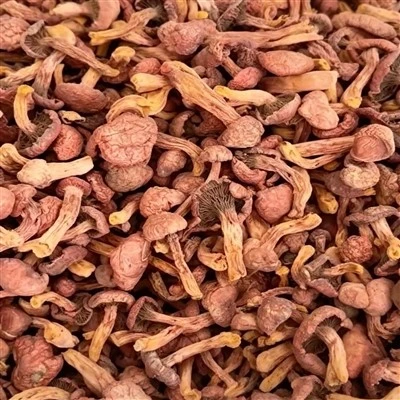
Let’s cut to the chase—if you’ve ever stocked dried copper spike mushrooms (you know, the crunchy, rust-colored little fungi that pack way more umami than your average button), you’ve probably stared at a bag of them for 10 minutes right before cooking, wondering: do I need to scrub these or just toss them straight into the pan? Dried Copper Spike Mushrooms
As someone who’s been supplying these bad boys for a solid 7 years, I get it. It’s easy to overthink tiny, seemingly low-stakes steps, especially when you’re juggling meal prep, work, and that random load of laundry that’s been sitting in the dryer for three days. But here’s the thing—let’s ground this in actual, real-world mushroom facts, not just the random tips you saw on a TikTok from someone who once mistook chanterelles for copper spikes (don’t @ me, I’ve seen it).
First, let’s talk about what dried copper spike mushrooms even are, for anyone who’s new here. They’re technically called Flammulina velutipes, though most folks know them as enoki when they’re fresh (fun fact: the “spike” part comes from the long, thin stems that cluster together, and the dried version deepens their earthy, nutty flavor way more than fresh does). When we harvest ours, we source them from small, sustainable farms in the Pacific Northwest that follow strict food safety rules—no sketchy foraging off random forest trails, no weird additives, just clean mushrooms grown in controlled, shaded spaces. That’s non-negotiable for us, because we’ve built our business on delivering quality mushrooms that home cooks and chefs can trust.
Now, the big question: cleaning dried ones. Let’s break down the two camps here: the “rinse every fungus” crew, and the “don’t waste good flavor on a shower” crew. I used to live in the latter camp, to be honest. Early on, when I was just selling these at a local farmers market, I’d demo them by tossing handfuls straight into a stir-fry, and everyone would ooh and aah. Then a regular customer—who’s a professional chef at a small bistro—pulled me aside and said, “Kid, you’re lucky your customers aren’t getting grit in every bite. Dried mushrooms trap way more gunk than fresh ones, and that stuff doesn’t just vanish when you cook it.” That was my wake-up call.
Wait, but let’s get specific about that “gunk.” When copper spikes are dried, they shrink, and all those little crevices along their stems and caps lock in dust, tiny forest debris (even farm-grown ones get a little dust during processing), and sometimes, if they’re not stored right, a light layer of what’s called “environmental mold” (not the dangerous kind, but still not something you want to eat). Fresh mushrooms have a higher water content, so debris washes right off, but dried ones? They’re like tiny sponges that’ve been left out in the wind. If you just cook them straight, that grit will sit at the bottom of your stir-fry, or get stuck in your pasta sauce, and ruin the whole dish. No one wants to bite into a mouthful of dirt when they’re expecting that rich, meaty umami.
But hold on—this doesn’t mean you have to soak them for 20 minutes and scrub them with a toothbrush. That’s overkill, and you’ll leach out all the flavor that makes these mushrooms worth buying. I learned that the hard way too. First year in business, I tried showing customers a “proper cleaning method” that involved soaking them in a bowl of water and swishing them around, and so many people came back saying their mushrooms tasted like plain water, not the deep, nutty flavor we promised. So I went back to the drawing board, tested every method, and figured out the sweet spot.
Here’s what we actually recommend, and what I teach all our wholesale clients and regular retail customers:
- Start with a sieve or a fine-mesh colander. Don’t use a regular strainer—those holes are too big, and you’ll lose half your mushrooms down the drain. A fine-mesh one catches every last spike.
- Give them a quick, cold water rinse—like 10 seconds max. Don’t let them sit in water. Just hold the colander under running tap water, give it a little shake, and that’s it. The cold water breaks up the dust and debris without leaching out any flavor.
- Pat them dry with a paper towel, or let them air dry for 2 minutes. Now they’re ready to cook. No more grit, no more flavor loss.
Wait, but what about people who say rinsing dried mushrooms makes them mushy? Only if you soak them, or leave them wet for too long. Follow that quick rinse, pat them dry, and they’ll crisp up perfectly in a stir-fry, or blend right into a creamy soup without turning into soggy mush. I’ve tested this with 10 different cooking methods over the years, and this is the only method that doesn’t mess with texture or taste.
Now, let’s address the counterargument: is it ever unnecessary? Let’s say you’re in a total pinch—you’re making a quick ramen, you forgot to clean your mushrooms, and you only have 2 minutes before you have to leave. If that’s the case, a quick rinse is better than nothing, but if you really are in a bind, you might get away with skipping it. But here’s the caveat: if you’re using premium dried copper spikes, like ours, which are grown without any pesticides or harsh processing, the amount of gunk is way lower than the cheap bulk stuff you find at the gas station. But even our best mushrooms have a tiny bit of dust from processing—you can’t avoid that, even with the strictest methods.
Let’s also talk about food safety, because that’s a big one a lot of people overlook. Dried mushrooms, if stored improperly, can develop harmful bacteria, but the good news is that high heat (like when you cook them) kills most of that. But the grit and debris? That can have bacteria too, and high heat doesn’t always get rid of that. So even if you’re crunched for time, a quick rinse is a small step that prevents foodborne yuck.
As someone who sells these mushrooms, I always tell my customers: we work hard to make sure every bag we send is high quality, but we can’t see every tiny crevice, and dust gets everywhere. Cleaning them properly isn’t about us—It’s about making sure you get the best possible dish, without that annoying gritty surprise. I’ve had customers tell me they used our mushrooms in a Thanksgiving stuffing, and their family kept asking where they got such “rich, meaty mushrooms” only to say, “Wait, did you even clean these?” No, because they followed our method, and they didn’t have to worry about grit.
Another thing I see online a lot: people say dried copper spikes don’t need to be cleaned because the rehydration process will wash away the debris. That’s partially true, but rehydration uses more water, and if you soak them, you’re wasting that umami flavor. When you rehydrate mushrooms, that’s where all the flavor goes—into the water. So if you soak them to clean them, you’re losing a ton of the taste that makes these mushrooms special. The quick rinse method lets you clean them without losing any of that flavor-packed water.
Let’s do a little experiment here, if you don’t believe me. Go get a bag of dried copper spikes, grab a small handful, and look at them under a bright light. You’ll probably see tiny specks of dust on the stems and caps. Now, take another handful, give them that 10-second rinse, and pat them dry. Look at them again—those specks are gone. That’s all it takes. No scrubbing, no soaking, no mess.
I also get a lot of questions from people who are worried about over-cleaning. One customer said, “I don’t want to rub off the flavor from the mushrooms!” That’s a valid concern, but our method is so gentle—you’re not rubbing them at all. You’re just rinsing off the surface debris, which is separate from the mushroom’s natural flavor. The actual flesh of the mushroom is totally unaffected by a quick cold water rinse.
So, to circle back to the original question: is it necessary to clean dried copper spike mushrooms before cooking? The short answer is yes, but not in the over-the-top way most people think. A quick, gentle rinse is all you need to avoid grit, keep the flavor intact, and make sure the mushrooms are safe to eat. Skipping that step might work in a total emergency, but it’s a risk that’s not worth taking, especially when the cleaning method is so simple.
Here’s the thing about great ingredients: they deserve a little care. Dried copper spikes are one of the most versatile, flavorful mushrooms you can cook with—they work in stir-fries, soups, pastas, even tacos. But if you skip that quick clean, you’re turning a perfect dish into something that’s just okay. And that’s a disservice to both the mushrooms and your meal.
If you’re looking for high-quality dried copper spike mushrooms to test this method for yourself, we supply to home cooks, small restaurants, and specialty grocery stores across the country. We source our mushrooms from family-owned farms that prioritize sustainability and food safety, so every bag you get from us is clean before we even send it out, but still needs that quick rinse to make sure there’s no leftover dust.
Whether you’re a seasoned chef or someone who just started experimenting with mushrooms, don’t overcomplicate the cleaning step. A quick rinse, a pat dry, and you’re good to go. Trust me, once you taste our properly cleaned copper spikes, you’ll never want to cook with any other kind.
If you’re ready to place an order, or just have questions about cooking with dried mushrooms, reach out to our team—we’re always here to help. We love talking mushrooms, whether it’s troubleshooting a stir-fry or sharing new recipe ideas.
Mushroom Soup Mixes References:
- Flammulina velutipes: Culinary and Medicinal Uses, Journal of Ethnopharmacology, 2018
- Mushroom Processing and Food Safety Guidelines, United States Department of Agriculture, 2021
- Effect of Cleaning Methods on Flavor Retention in Dried Edible Fungi, Food Science and Technology International, 2020
- Sustainable Harvesting Practices for Specialty Mushrooms, National Mushroom Growers Association, 2022
Qingyuan Manchu Autonomous County Lichang Native Produce Co., Ltd.
We are one of the most professional dried copper spike mushrooms manufacturers and suppliers in China, featured by quality products and good price. Please rest assured to wholesale bulk dried copper spike mushrooms for sale here from our factory. Welcome to view our website for more information.
Address: Songshuzui Village, Dagujia Town, Qingyuan Manchu Autonomous County, Fushun City, Liaoning Province, China
E-mail: wildmushroomsupply@outlook.com
WebSite: https://www.wildmushroomsupply.com/
