If you’ve ever stood next to a pipeline section at a chemical plant, a water treatment facility, or even a food processing line, the flange might seem like just a plain metal ring bolted between two pipes. But for anyone who’s ever dealt with a leak that shut down operations for days, or a flange that corroded through mid-process, you know that its chemical resistance isn’t just a detail—it’s the difference between a smooth run and a costly crisis. As a flange supplier who’s worked with engineers, plant managers, and maintenance teams for over a decade, I’ve lost count of how many times I’ve gotten calls asking, “What’s the chemical resistance of a flange, really?” It’s not a one-size-fits-all answer, and cutting corners on that part of your flange selection will cost you far more upfront than picking the right component for your process. Flange
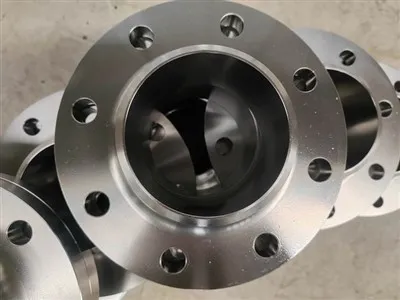
First, let’s break down what “chemical resistance” actually means for a flange. It’s not a single property; it’s how the material of the flange interacts with the chemicals it’s exposed to—whether that’s a dilute acid, a caustic soda solution, a hydrocarbon, or a corrosive brine. The goal is to choose a flange that won’t degrade in that environment: no pitting, no cracking, no swelling, no seizing. Even small flaws in chemical resistance can turn into big problems: a pinhole leak from corrosion can spill hazardous materials, a seized bolt can make a flange impossible to remove during a maintenance shutdown, and a brittle flange can crack under pressure during a system surge.
The foundation of a flange’s chemical resistance is its material. Not all metals, alloys, and specialty materials handle chemicals the same way, and matching the right one to your process is non-negotiable. Let’s go through the most common materials we supply, and what they’re good for (and what they’re not).
Carbon steel is the workhorse of flanges—affordable, strong, and widely available. But here’s the catch: carbon steel’s chemical resistance is terrible for most corrosive chemicals. It will rust, corrode, and degrade rapidly in dilute acids (like hydrochloric or sulfuric acid), caustic solutions, and even saltwater over time. We only recommend carbon steel flanges for non-corrosive, low-moisture environments, like steam lines, cold water systems, or mild air applications. If you’re running a chemical plant with acid or caustic, carbon steel is a ticking time bomb. That’s not to say it’s useless—we keep a full stock of carbon steel flanges for customers that need a low-cost, non-corrosive, non-hazardous setup—but it’s never the right pick for a chemically aggressive process.
Stainless steel is the next most common material, and for good reason. It’s got way better chemical resistance than carbon steel, but not all stainless steel is created equal. The two main grades we work with are 304 stainless steel and 316 stainless steel. 304 is a chromium-nickel alloy that resists mild chemicals, like nitric acid up to a certain concentration, food-grade processing solutions, and atmospheric corrosion. It’s a solid upgrade from carbon steel, so many customers default to 304 for their flanges. But when the chemicals get tougher? 304 starts to fail. It pits and corrodes quickly in saltwater, chlorine, and strong acids. That’s where 316 comes in. 316 has molybdenum added to the alloy, which gives it much better resistance to chlorides, brines, and even some organic acids. We supply 316 stainless steel flanges for marine applications, chemical processing plants handling chlorinated compounds, and pharmaceutical facilities that use sanitizing chlorine solutions. But even 316 has limits. It’s not resistant to strong sulfuric acid at high temperatures, and it can stress-corrode crack if exposed to caustic solutions under pressure.
Then there are the specialty alloys for the really tough environments. When a stainless steel flange fails, that’s when we start talking about duplex stainless steels (like 2205), Hastelloy, Inconel, and titanium. Duplex stainless steel is a mix of austenitic and ferritic stainless steel, giving it double the strength of standard stainless steel and great resistance to chlorides and stress corrosion cracking. It’s a favorite for oil and gas pipelines that carry briny water and sour gas, which would eat through 304 or even 316 in months. Hastelloy, on the other hand, is a nickel-molybdenum alloy that’s practically unbeatable for strong acids—including hydrochloric, sulfuric, and phosphoric acid at high concentrations and temperatures. We once had a customer in a fertilizer plant that had gone through three 316 flanges in a year due to exposure to concentrated sulfuric acid; switching to Hastelloy flanges cut their flange replacements to zero, even after five years. Inconel is another nickel-chromium alloy, best for high-temperature corrosive environments, like exhaust systems or chemical reactors that run at 1,000°F or more. Titanium is the go-to for chlorine-rich environments, like desalination plants or pulp and paper mills, because it forms a tight oxide layer that resists chlorine corrosion—something even 316 can’t do.
But material isn’t the only factor in a flange’s chemical resistance. The flange’s design and how it’s finished matter just as much. For example, a flange with a rough surface has more places for chemicals to get trapped, accelerating corrosion. That’s why we offer machined finishes on our flanges—even a smooth, satin finish is better than a rough, as-cast surface for chemical resistance. The type of flange face also plays a role: a raised face (RF) flange seals against a gasket in a slight raised ring, while a ring-type joint (RTJ) flange uses a metal ring gasket that fits into a groove. RTJ flanges are far better for high-pressure, high-corrosion environments because there’s less space for chemicals to seep between the flange and gasket, reducing crevice corrosion.
Gaskets are another piece of the puzzle that many customers overlook when asking about flange chemical resistance. Even the best flange material won’t hold up if the gasket between two flanges reacts with the process chemicals. For example, a nitrile rubber gasket works fine for water and mild oils, but it will swell and break down instantly in strong acids. For chemical processes, we recommend gaskets made from materials like PTFE (Teflon), EPDM, or compressed non-asbestos fiber, depending on the chemical. We always work with customers to match the gasket material to their process, because a flange is only as chemically resistant as its weakest link.
Temperature also has to be factored in. A material that works great at room temperature might completely break down at 200°F. For example, 316 stainless steel is fine for caustic solutions at room temperature, but at 300°F, it can develop stress corrosion cracking. That’s why when we get a request for a flange, we always ask three questions: what chemical are you running, what’s the concentration, and what’s the temperature? Skipping any of those leads to a bad call. We had a customer in a food processing plant who installed 304 flanges for a hot caustic wash system; within six months, the flanges had developed cracks and were leaking. Switching to 316 flanges solved the problem—until they increased the wash temperature to 350°F, at which point even 316 started to fail. We ended up recommending a duplex stainless steel flange for that application, which worked perfectly.
It’s also important to talk about what chemical resistance isn’t. It’s not about a flange being “invincible” to all chemicals—every material has its limits. That’s why we don’t push a $50 Hastelloy flange on a customer who just needs a carbon steel flange for a cold water line; that’s a waste of money. But it’s also why we’ll never suggest a 304 flange for a customer handling concentrated hydrochloric acid—we’ve seen too many leaks from that mistake.
Another common mistake we see is customers choosing a flange based only on price, not on chemical resistance. A lower-cost carbon steel flange might save you a few hundred dollars upfront, but if it corrodes out in six months, the cost of shutting down operations to replace it, plus the cost of cleaning up any chemical spills, will be thousands—if not tens of thousands—of dollars more. We once had a customer who tried to cut costs by using 304 flanges in a chlorine water line; within three months, a flange corroded through, spilling 500 gallons of chlorine into a nearby river. The cleanup alone cost $200,000, not to mention the regulatory fines and lost production time. That’s a mistake we hope no one has to make twice.
So, what should you do when choosing a flange with the right chemical resistance for your process? First, don’t guess. Work with a supplier who knows the materials and can give you honest, data-backed recommendations. We test all our flanges against common chemicals to confirm their resistance—we don’t rely on generic material specs. Second, provide all the details: the type of chemical, its concentration, temperature, pressure, and whether there are any other components in the process (like other metals that could cause galvanic corrosion). Galvanic corrosion is a big one—if you bolt a carbon steel flange to a stainless steel flange in a chemical, the carbon steel will corrode much faster, because the two metals create a small electric current. We always make sure our customers use flanges made of the same material (or compatible materials) to avoid that. Finally, don’t forget the gaskets and face type—they’re just as important as the flange itself for chemical resistance.

At the end of the day, a flange’s chemical resistance is a balance between material, design, finish, and the specific conditions of your process. It’s not a simple answer, but that’s why it’s worth getting right. As a flange supplier, our job isn’t just to sell you a ring of metal—it’s to make sure that flange works for your application, keeps your operations running safely, and saves you money in the long run. If you’re not sure which flange is right for your chemically aggressive process, reach out to our team to discuss your requirements in detail.
Ansi B16.36 Orifice Flange References
- Materials Park, O. (2018). Corrosion Resistance of Steel Alloys. ASM International Handbook, Volume 13B: Corrosion: Materials, 2nd ed.
- Jones, D. A. (2017). Principles of Chemical Corrosion, 3rd ed. Prentice Hall.
- Krause, H. H. (2020). Flange Design and Material Selection for Process Applications. Journal of Pressure Vessel Technology, 142(4).
- Nickel Alloys Institute. (2019). Chemical Resistance Data for Hastelloy, Inconel, and Duplex Stainless Steels. International Nickel Society.
- Davis, J. R. (2016). Stainless Steels: Composition, Properties, and Performance. ASM International.
- American Society of Mechanical Engineers (ASME). (2021). B16.5: Pipe Flanges and Flanged Fittings. ASME International.
Shanxi Xinshunda Flange Manufacturing Co., Ltd.
As one of the most professional flange manufacturers and suppliers in China, we also support customized service with competitive price. We warmly welcome you to wholesale high quality flange for sale here from our factory. For quotation, contact us now.
Address: Zhunagli Industrial Zone,jinchang Town,dingxiang,shanxi,china
E-mail: sales01@xinflange.com
WebSite: https://www.xinflange.com/
