Hey everyone, thanks for stopping by my blog – I’m Jake, and for the past 8 years, I’ve run a shop that builds and modifies busbar processing machines. Most days, I get questions that start the same way: “Can your standard machine handle my weird setup?” Or, “I need to do something totally custom – is that even possible?” Today, let’s cut the corporate jargon and talk straight: yes, you can modify a busbar processing machine for special requirements – and more often than not, that’s exactly what our clients actually need. Busbar Processing Machine
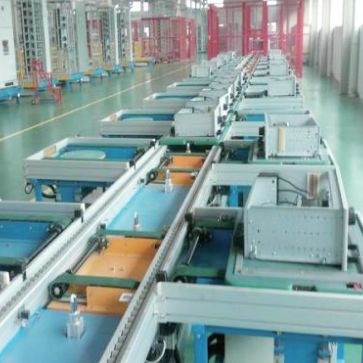
First, let’s break down what “special requirements” even means here. I’ve seen it all over the years: a solar farm installer who works with 6-inch thick aluminum busbars that no standard machine can bend, a data center builder who needs super precise hole spacing for their power distribution cabinets, a industrial electrician who runs on-site jobs and needs a machine small enough to fit in a pickup truck but still punch 1-inch holes clean. Standard machines are great – they’re built for the most common jobs, but “common” only covers about 60% of the work we see. The other 40% is where modifications come in.
A lot of people think modifying a machine means tearing it apart and rebuilding it from scratch. Nah, that’s not how we do it – and it’s not how most reputable suppliers do it, either. Let’s start with the basics of a standard busbar machine: it usually has three main parts – a cutting station, a punching station, and a bending station. Each of these has adjustability built in, but sometimes you need to tweak beyond the default settings. For example, if you’re working with copper busbars that are 10mm thick instead of the standard 6mm, you don’t need a whole new machine – you just swap the punch and die set for a heavy-duty one, and recalibrate the ram speed to avoid warping the metal. That’s a simple, low-cost modification we do all the time.
But some special requirements are way more specific. Last year, a client was building a new electric bus depot, and their busbars needed to have notches cut at a 45-degree angle instead of the standard 90-degree bends. Their wiring layout was totally different, so off-the-shelf machines couldn’t do that. We didn’t just add a new tool – we rebuilt the bending station’s arm to pivot at the exact angle they needed, and programmed the machine’s PLC (that’s the little computer brain, if you don’t know) to save that angle as a custom preset. Now, when they run a batch, they just pick “Electric Bus Notch” from the menu instead of adjusting everything manually. It took us about two weeks to design and install, and it’s worked flawlessly for them ever since.
Another big one: portability. A lot of field electricians hate big, heavy busbar machines – they can’t move them around job sites easily. We’ve modified standard machines by stripping down the frame, adding heavy-duty wheels and a towing hitch, and even trimming the power supply from 480V (which you’d find in a factory) to 240V, so you can plug it into a generator on-site. Last month, a contractor who builds remote wind farms asked us to do that – they needed to process busbars at the top of a mountain, where there’s no 3-phase power. Modifying the power system and making the machine compact cut their setup time by 3 hours per job, and saved them from hauling a $10k machine up a steep road.
Wait, but is there a point where a modification is too much? Yeah, sometimes. If someone’s asking to process busbars that are 2 inches thick and 12 inches wide – that’s way beyond what even a modified machine can handle without massive safety risks. In those cases, we don’t force a modification – we’d tell them straight up, “Hey, here’s what we can do, but if you need that level of custom, we might have to build a machine from the ground up.” And building from scratch isn’t as scary as it sounds – it’s just a more extensive modification, basically. For a recent data center client, we built a machine that only does punching and notching (no cutting or bending) because that’s all they needed, and calibrated the punch accuracy to +/- 0.1mm – way more precise than any standard machine. They needed that because their busbars connect to servers that are super sensitive to misaligned holes; one tiny mistake could shut down a whole rack. That’s the kind of custom work that makes our job worth it, honestly.
Here’s the thing I always tell new clients: don’t be afraid to tell us what you actually need. A lot of people hold back because they think “special” means it has to be complicated. But half the time, the simplest mods solve their biggest problems. Let’s say you’re working with stainless steel busbars, which is way harder than copper or aluminum. Instead of a big modification, we just use a harder tool steel for the punches and dies, and slow down the punch speed so the metal doesn’t crack. That’s a 2-day mod, not a 2-week build – and it makes all the difference for someone who works with stainless all the time.
I also want to talk about why modifications are better than buying a custom machine from scratch. First, it’s way cheaper. A standard machine costs about $15k, a custom one is $30k+, but a modification is usually 20-30% of that cost. Second, you still get the reliability of a machine that’s been tested for years. We don’t invent a whole new system – we tweak a system we know works, so there’s less chance of it breaking down on you. Third, you get to keep the parts you already have. If you ever need to fix a modified machine, you can still buy standard replacement parts, not some weird custom part that takes 2 weeks to ship.
But let’s be real, there are pitfalls. I’ve seen clients try to modify their own machines without knowing what they’re doing. Last year, a guy tried to add a custom bending tool to his standard machine, and he didn’t recalibrate the ram pressure. He ended up warping $500 worth of busbars, and the machine itself got damaged. That’s why it’s important to work with someone who knows these machines inside and out. We do a test run for every modification before we send it out – we run a few sample pieces, adjust as needed, and give the client a full tutorial on how to use the new setup. No guesswork, no mistakes.
Another common question: “Will modifying my machine void the warranty?” That’s a big one. For our machines, no – as long as we do the modification. We stand behind our work, so if we tweak something, the whole machine is still covered. If you do it yourself, yeah, that voids it, obviously. That’s why it’s smart to go with the supplier you bought your machine from for mods – they know the ins and outs, and they can back up the work.
Let me give you a quick example of a weird one I did last month. A small electrical shop that makes custom control panels needed to cut notches in busbars at an angle that wasn’t straight up or down – like, a slant that follows the shape of a specific panel. They didn’t want to have to bend the busbar after cutting, so we added a rotating table to the punching station. Now, they can set the table to any angle from 0 to 90 degrees, and cut the notch perfectly the first time. It was a small mod – just a table and a few bolts – but it cut their production time per panel by 40%. That’s the kind of win that makes this job fun.
At the end of the day, busbar processing machines are tools – tools should adapt to your work, not the other way around. You shouldn’t have to adjust your entire job to fit what a standard machine can do. That’s why modifications are such a big part of what we do. Whether you need a bigger punch, a different angle, a smaller frame, or a more precise setting, we can work with you to make it happen.
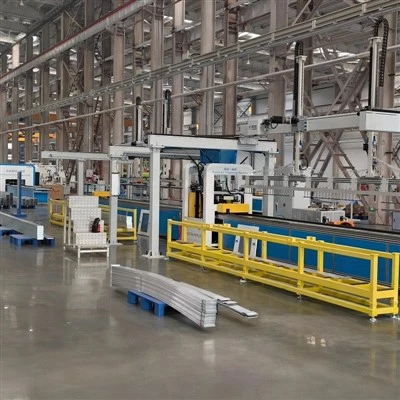
If you’re thinking about modifying your busbar processing machine – or even if you’re not sure what you need – hit us up. We don’t just sell machines; we help solve problems. Whether it’s a tiny tweak or a full custom build, we’ll give you straight answers, no fluff, no hidden costs. Just tell me what your special requirement is, and we’ll figure out how to make it work.
Busbar Accessories References
Busbar Processing Machine Industry Standards, 2023
Industrial Electrical Equipment Modification Best Practices, International Association of Electrical Industries, 2022
Precision Punching and Bending for Power Distribution, Journal of Electrical Manufacturing, 2021
Suzhou Kiande Electric Co., Ltd.
Suzhou Kiande Electric Co., Ltd. is one of the most professional busbar processing machine manufacturers and suppliers in China, also supports custom service and OEM&ODM service. Welcome to buy durable busbar processing machine made in China here and get quotation from our factory. Quality products and reasonable price are available.
Address: No.123, Suzhou Avenue East, Suzhou Industrial Park Suzhou, Jiangsu 215000 China
E-mail: saleswmkc@kiande.cn
WebSite: https://www.busbarcncmachine.com/
