Hey there,
If you’ve ever stared at your chest freezer’s power bill and wondered why it’s sucking down so much energy, you’re not alone. As a chest freezer supplier, I talk to customers all the time who are shocked at how much their unit is costing them to run—especially when they’re using it to stock up on bulk groceries, freeze homemade meals, or keep fishing/camping gear cold through the winter. The good news? You don’t have to buy a brand-new high-efficiency model tomorrow to slash those costs. A few simple tweaks, plus a bit of routine know-how, can make a huge difference in how much energy your chest freezer uses. Let’s break this down like we’re chatting over a coffee, no boring jargon allowed. Chest Freezer
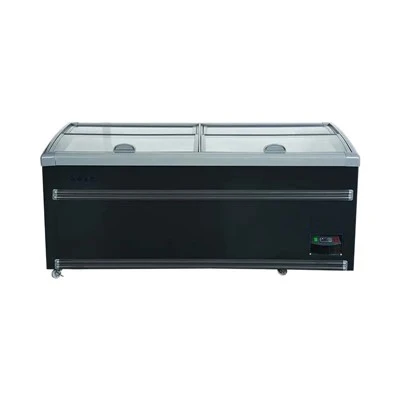
First, let’s get one thing straight: chest freezers are way more energy-efficient than upright fridges, right? They hold cold air better because cold air sinks, so the top opening (instead of a front door) means less cold air escaping every time you open it. But that doesn’t mean they’re perfect. Most energy waste comes from small, easy-to-fix habits or tiny issues you might not even notice. Let’s start with the biggest no-no that people mess up all the time: overstuffing (or understuffing) your freezer. Wait, hold on—isn’t more food better? Actually, no. If you cram it so tight you can’t grab a bag of frozen veggies without moving five other things, you’re blocking the air vents. Almost every chest freezer has internal vents (yes, even the budget ones) that circulate cold air. Block those, and the compressor has to work way harder to keep the temp down. On the flip side, if your freezer is less than half full, all that empty space is cold air trying to escape and warm air taking its place. Pro tip from our team: fill empty gaps with old milk jugs full of water (they freeze solid, so they keep the cold in and don’t take up extra space) or unused freezer-safe containers. That’s a trick we tell every customer who calls in asking for energy hacks, and it works like a charm.
Next, the temperature setting. I see this all the time: someone sets their freezer to the coldest possible setting “just to be safe,” and ends up wasting 20-30% more energy than they need to. What’s the sweet spot? For chest freezers, the FDA recommends 0°F (-18°C) or lower, but you don’t need to crank it to -10°F if your food stays frozen solid. Here’s how to check: stick a freezer thermometer (they’re cheap at any grocery store) in the center of the freezer, away from the walls and the door. If it’s holding steady at 0°F, you’re golden. If it’s colder than that, dial the setting back a notch. Also, avoid opening the door more than you have to, and keep door openings short. Every time you yank the lid open for five minutes to decide what you want, you’re letting all that cold air pour out and forcing the compressor to catch up. My rule: make a list of what you need before you open it, and grab it fast. No loitering in front of the freezer while you debate whether you want ice cream or frozen pizza.
Then there’s the location of your chest freezer. A lot of people tuck it in a random corner of the basement or garage, not thinking about how the surroundings affect its energy use. If it’s sitting next to a water heater, furnace, or a wall that gets direct sunlight all day, the compressor has to work overtime to fight that extra heat. We always advise customers to put their chest freezer in a cool, dry, well-ventilated spot. Keep at least four inches of space around the back and sides for air flow—no shoving it right up against the wall. If it’s in the garage, insulated walls help a ton, especially in places where temps swing from sweltering summer to freezing winter. Wait, what about winter? If your garage gets below 0°F, that can actually make your freezer work harder, because some units can’t regulate when it’s that cold. If that’s your situation, move it to a slightly warmer spot (like the back of a climate-controlled basement) when it’s super cold out, or check if your model has a “cold weather mode” (most newer ones do). That’s another thing we walk customers through when they buy from us—we don’t just sell a unit, we give tips on where to put it.
Cleaning the coils is probably the most overlooked hack, and it’s so simple. The condenser coils (usually on the back or bottom of your chest freezer) are responsible for releasing the heat that the compressor pulls out of your food. If they’re covered in dust, pet hair, or crumbs, they can’t do their job efficiently. That makes the compressor run longer, use more energy, and even wear out faster. How often should you clean them? Every 6 months, or more if you have pets that shed. Grab a vacuum with a brush attachment, unplug the freezer first (safety first, folks), and gently brush and suck off the gunk. For coils on the back, you might have to move the unit a little away from the wall, but it’s worth the 10 minutes of work. I’ve had customers tell us after cleaning their coils that their energy bill dropped by $15-$20 a month— that’s nothing to sneeze at.
Another big one: door seals. The rubber gasket around your freezer lid, also called the door seal, gets worn out over time, gets dirty, or cracks, which lets cold air escape. How do you test if it’s working? Close a dollar bill (or a piece of paper) between the lid and the seal, then try to pull it out. If it slides out easily, the seal is loose. If it tugs with resistance, it’s good. If it’s bad, you can clean it first—wipe it down with warm soapy water (no harsh chemicals) to get rid of gunk that might be keeping it from sealing tight. If it’s still loose, you can replace the seal (we sell them for our models, just fyi) or adjust the lid hinges if it’s misaligned. A tight seal can save you 10% or more on energy costs, no joke. We had a customer last year who thought her freezer was broken because it was running nonstop, and it turned out her seal was cracked—after replacing it, her energy use dropped by a quarter. That’s a super easy fix that a lot of people miss.
Wait, what about defrosting? If you have a manual-defrost chest freezer, ice build-up inside the walls is a major energy drain. Ice is a good insulator, so a thick layer of ice (more than 1/4 inch) makes the compressor work way harder to keep the cold in. How often do you need to defrost? Every 6-12 months, depending on how much you use it. When you defrost, make sure to take out all the food first, turn it off, and let the ice melt naturally. You can speed it up with a bowl of hot water inside, but never use a sharp tool to chip the ice—you’ll puncture the freezer and end up with a way bigger problem. If you have a no-frost model, you still need to wipe out any excess moisture now and then, even if it doesn’t build up into big ice chunks. That’s just good routine care.
Now, let’s talk about when it might be time to upgrade, not just tweak. If your chest freezer is over 10 years old, it’s probably using way more energy than a new Energy Star model. We’ve seen that a 10-year-old freezer can use twice as much energy as a modern high-efficiency one. But before you run out to buy a new one, make sure your old one is actually the problem. Run through all the tips above first—you might be shocked how much you can fix without a new unit. If you do decide to upgrade, look for the Energy Star label—those units are tested to meet strict efficiency standards, so they’ll save you money over time. Also, when you get rid of your old freezer, don’t just leave it out—make sure to remove the door seal so kids can’t get stuck inside (safety thing!), and many appliance stores will haul it away if you buy a new one from them.
Wait, one more small habit that adds up: avoid opening the lid during power outages. If the power goes out, your chest freezer will keep food cold for 24-48 hours if the lid is closed. Every time you open it, you let cold air out, and the food will thaw faster. If the outage is longer than that, you can pack extra ice or frozen coolers in there to keep the temp down. That’s a quick tip that keeps you from wasting food and having to re-freeze things, which also uses energy because you have to run the compressor longer to re-freeze stuff.

Let me wrap this up. Improving your chest freezer’s energy efficiency isn’t about spending a ton of money—it’s about small, consistent habits and tiny fixes that add up to big savings on your power bill. Whether you’re overstuffing, ignoring a dirty coil, or running it too cold, most issues are super easy to fix. If you’re in the market for a new high-efficiency chest freezer, or you have questions about maintaining the one you already have, feel free to reach out to our team to chat about what works for your needs. We’re not just a supplier—we’re here to help you get the most out of your appliance without breaking the bank.
Beverage Cooler References
- U.S. Department of Energy. "Energy Efficiency Tips for Freezers." Energy.gov, 2023.
- U.S. Food and Drug Administration. "Food Storage Temperatures and Times." FDA.gov, 2022.
- Consumer Reports. "How to Make Your Freezer More Energy Efficient." ConsumerReports.org, 2023.
- Association of Home Appliance Manufacturers. "Energy Efficiency Guidelines for Chest Freezers." AHAM.org, 2022.
Zhejiang Xingbao Electrical Appliances Co., Ltd.
As one of the most professional chest freezer manufacturers and suppliers in China, we also support customized service. Welcome to wholesale bulk high quality chest freezer in stock here from our factory. If you have any enquiry about pricelist, please feel free to email us.
Address: No. 10 Baisha Road, Lianhang Development Zone, Chang’an Town, Haining City, Jiaxing City, Zhejiang Province, China
E-mail: zjxingbao@gmail.com
WebSite: https://www.sunborncn.com/
