Hey there, fellow wellness lovers and small business owners! If you’ve ever shopped for moxa jars (let’s just call ’em moxa jars, saves us both time) or dabbled in at-home moxibustion, you’ve probably glanced at a shelf full of them and thought, “Wait—why do some look like thick pottery, others like bamboo tubes, and a few even like glass?” As someone who’s been supplying moxa jars to clinics, online wellness stores, and even individual practitioners for the last six years, I get it. A lot of folks don’t stop to think about what these jars are actually made of… but that “what” makes all the difference in how effective they are, how long they last, and even how much you’re paying for one. Moxibustion Jar
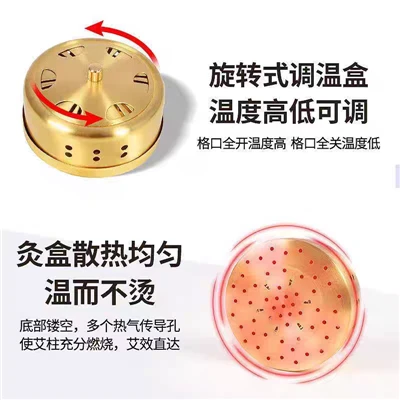
Let’s cut through the confusion. I’m not here to regurgitate textbook science—just the stuff I’ve learned from testing hundreds of jars, talking to acupuncturists who use ’em every day, and helping folks pick the right one for their space. Let’s break down the main materials, why each matters, and which ones I always stock for my customers.
First up: the OG material, clay. If you’ve been around moxibustion, you’ve definitely seen clay jars. They’re been around for centuries, right? Back in ancient China, before plastic or even glass, potters would fire thick clay into these rounded jars with a tiny top hole for moxa sticks and a mesh screen at the bottom to hold the ash. Wait—let’s get real, not all clay’s the same. I used to buy cheap bulk clay jars from a random supplier and noticed they’d crack after a month or two if a client left ’em on a radiator (don’t laugh, it happens). Now I only use high-fired terracotta clay—you know, the stuff that’s dense, not porous like flower pots. Why dense? Because clay’s job when you heat moxa is to hold that heat, not let it escape. A porous clay jar would suck up the heat like a sponge, making the moxa feel weak and useless. High-fired terracotta also doesn’t absorb smoke, which is a huge win—no gross, stuck-on smoke smell after a few uses, and it’s easy to wipe clean.
The thing I love most about clay is the gentle, even heat it gives off. Acupuncturists tell me that’s key for areas like the lower back or shoulders—you don’t want sharp, intense heat that burns skin, you want that warm, deep-down feeling. The only downside? Clay is heavy, and if you drop it (oops, we’ve all been there), it can crack. That’s why I include a soft cloth sleeve with every clay jar I send out—small touch, but it prevents so many accidents.
Next on the list: bamboo. Bamboo moxa jars are super popular right now, especially for people who love lightweight, eco-friendly gear. Bamboo’s a grass, not wood, so it’s way more sustainable—good for folks who care about their carbon footprint. The jars are usually hollowed-out bamboo stalks, with a metal mesh at the bottom and a lid on top. Wait, let’s test this: I had a customer last year who’s a mobile acupuncturist—she carries her gear in a backpack, and she told me her bamboo jar is way easier to toss in there than a heavy clay one. But here’s the thing about bamboo: it’s not as dense as clay, so it doesn’t hold heat as long. That means you have to re-light your moxa a little more often, which is fine for at-home users, but for a clinic with back-to-back clients? Bamboo’s not the first pick. Also, if you get a low-quality bamboo jar, the mesh might be flimsy and fall off after a few uses. I only stock bamboo jars with thick, stainless steel mesh—way sturdier than the thin plastic mesh some suppliers use.
Then we’ve got glass jars. Yeah, glass. I know, it sounds counterintuitive—isn’t glass cold? Wait, no—when you have a moxa stick inside, the glass acts like a heat shield, trapping the warmth so it radiates out. Glass jars are usually cylindrical, with a wide opening so you can reach in and clean the ash easily (no scraping old clay gunk out of a narrow hole, ugh). A lot of new at-home users love glass because you can actually see the moxa burning—no guessing if it’s still lit or not. But let’s be honest: glass is fragile. I once shipped a batch of glass jars and three broke in transit—lesson learned, I now wrap each one in bubble wrap twice. Also, glass doesn’t hold heat as long as clay, so you might need to move it closer to your skin as you use it. For folks who are extra careful (or use it on a flat surface), glass is great, but not my top pick for anyone who’s clumsy (no judgment, I have two left hands).
Wait, there are a few other materials you might run into, but they’re usually cheap and low-quality, so I skip ’em. Like resin-based jars? Don’t buy those. They melt when the moxa gets hot, leave weird fumes, and crack within a week. Or thin metal jars? They heat up too fast, burn the skin, and get super heavy. I had a customer who tried a metal jar once and ended up with a second-degree burn—definitely not worth saving a few bucks.
Now, let’s talk about how material impacts actual use, because that’s what matters, right? If you’re buying a jar for your clinic, you want something durable that holds heat for multiple clients—high-fired clay is the way to go. If you’re a mobile practitioner or someone who travels a lot, bamboo’s lightweight and easy to carry, just make sure it’s thick bamboo. If you’re a total beginner who wants something easy to clean and can keep an eye on the moxa, glass is fine (just be gentle with it).
Wait, I should mention something I’ve noticed over the years: a lot of suppliers mix up materials or lie about what their jars are made of. Like, they’ll call a low-fired clay jar “high-quality terracotta” but it’s actually porous. How to spot that? Hold it up to a light—if light shines through, it’s porous, skip it. High-fired terracotta won’t let any light through. For bamboo jars, run your finger along the inside—if it’s rough or splintery, it’s thin bamboo, not the good stuff. For glass jars, check the thickness—thin glass will crack easy, thick borosilicate glass (the kind used for science lab beakers) is way sturdier.
I also get a lot of questions about safety, which is tied to material. Clay is naturally non-toxic, no weird chemicals leaching into the heat. Bamboo is all natural, no coatings (as long as it’s untreated). Glass is food-grade (or at least lab-grade, which is the same) so no toxic fumes. That’s why I only stock these three materials—no cheap fillers that can cause issues.
So why did I start this blog? Because a few months ago, a customer emailed me saying she bought a moxa jar from another supplier, and it cracked after two uses, burned her skin, and the supplier wouldn’t refund her. That’s why I make sure every jar I send is tested— I light a moxa stick in each one, hold it to a cotton pad to check for even heat, drop it from a foot height (gently, I’m not trying to break stuff) to make sure it doesn’t crack. I’d rather pay a little extra for materials that last than cut corners and have customers disappointed.
Now, if you’re a clinic owner looking to restock, or a wellness store wanting to add moxa jars to your inventory, or even an individual who’s tired of buying flimsy jars that fall apart—let’s chat. I’ll send you free samples if you want to test ’em yourself, and I can help you pick the right material for your needs—no pushy sales stuff, just honest advice from someone who’s in this every day.
Wait, one last thing: I know some folks prefer combination materials, like a bamboo jar with a clay insert? Yeah, those exist, and they’re actually pretty good—you get the lightweight bamboo and the heat-holding clay. I started carrying those last year, and they’re been a huge hit with customers. But even those are better than the cheap single-material jars from no-name suppliers.
At the end of the day, the material of your moxa jar isn’t just a trivial detail—it’s what makes the therapy effective, safe, and worth the investment. I’ve spent years testing this stuff, and I can tell you that high-fired clay, thick bamboo, and borosilicate glass are the only materials I trust. If you’re tired of wasting money on jars that don’t work, or you’re not sure which one to pick, reach out—we can talk through your needs, answer any questions, and get you stocked with jars that’ll last. No hassle, no weird fine print, just good moxa gear.
Moxa Box References:
- World Health Organization. (2018). Traditional Medicine Strategy 2014–2023. World Health Organization Press.
- Chinese Acupuncture and Moxibustion Association. (2020). Clinical Guidelines for Moxibustion Therapy. China Press of Traditional Chinese Medicine.
- Journal of Ethnopharmacology. (2019). Materials and Design of Traditional Moxibustion Devices: A Review of Historical and Modern Practices. Elsevier.
- United States Department of Agriculture. (2021). Bamboo as a Sustainable Material for Consumer Goods. USDA Forest Service.
- International Organization for Standardization. (2017). Safety Requirements for Traditional Moxibustion Devices. ISO 13485:2016.
Jiaxing Yuanfan Imp. & Exp. Co., Ltd.
As one of the most professional moxibustion jar manufacturers in China, we’re featured by quality products and good service. Please rest assured to wholesale high-grade moxibustion jar made in China here from our factory. Contact us for quotation.
Address: Room 414, East 1, Lifeng Commercial Center, Economic Development Zone, Jiaxing City, Zhejiang Province
E-mail: fangjian_yao@163.com
WebSite: https://www.yuanfanmugwort.com/
