Hey there! If you’ve ever dealt with rebuild parts, you know how frustrating a corroded component can be. You put in the work to bring a used part back to like-new condition—machine it, clean it, test it—only for rust or chemical buildup to ruin it before it even hits a customer’s shelf. As a rebuild parts supplier, I’ve seen this happen way too many times, and trust me, it’s a total waste of time, materials, and money. Today, I’m walking through what actually works to stop corrosion on rebuild parts—no fluff, just real stuff we’ve tested in our shop every day. Rebuild Parts
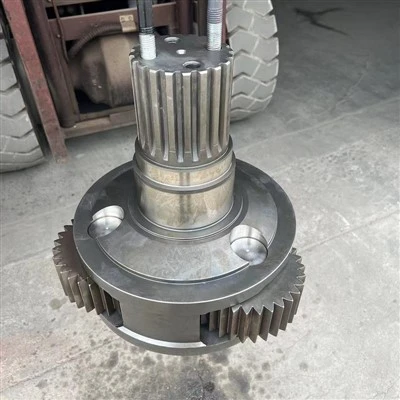
First, let’s get on the same page about what corrosion even is for rebuild parts. It’s not just the rust you see on old bolts. For us, it’s often microscopic: after stripping a used part, tiny pits left behind from its original use trap moisture and road grime (if it’s truck parts) or coolant residue (if it’s engine components). Those pits are perfect breeding grounds for corrosion, and once it starts, it spreads faster than you can say “returned part.” So step one? Fix the surface before you even think about applying any protection.
We used to skip this part a little—just blast the part with media and call it good. Big mistake. Now, we do a double clean: first, a degreaser soak to break down all the built-up gunk that’s been caked on for years. Not just any degreaser, by the way—we use a pH-neutral one because strong acidic or alkaline cleaners can etch the metal and make corrosion way more likely. After soaking, we hit it with a wire brush for tough spots, then a rinse with hot water (way more effective than cold at getting rid of leftover degreaser) and a quick blow-dry with compressed air. Wait, blow-dry isn’t enough—we immediately put the part in a low-temperature oven for 20 minutes to get every last bit of moisture out. Even a single drop of water left in a crevice can start corrosion in days, especially if the part is stored on a shelf with high humidity.
Next up, choosing the right protective coating. This is where a lot of suppliers go wrong—they grab whatever cheap coating is on the shelf and call it a day. But different parts need different stuff. Let’s break it down by the metal, ‘cause that makes a huge difference. For steel parts (like crankshafts, connecting rods, or suspension arms), we use a zinc phosphate coating. It’s not flashy, but it sticks way better than paint, and it creates a barrier between the metal and the air. We used to use spray-on zinc, but switched to a dip method for our rebuilds—way more even, no missed spots on threads or inside hollow parts. For aluminum parts (like intake manifolds or cylinder heads), zinc phosphate still works, but we add a step: a conversion coating for aluminum, which is a thin film that doesn’t leave residue and doesn’t mess up any machining specs. We learned that the hard way—one time we skipped the conversion coating on an aluminum head, and it corroded so bad the threads stripped when the customer installed it. Total do-over, and that cost us a repeat order.
For parts that are going to be stored for a while before shipping—like big components we don’t sell super fast—we go a step further. We use a dry film lubricant (DFL) that’s not like the grease you put on your bike chain. It’s a thin, waxy coating that doesn’t attract dust or moisture, and it’s easy to wipe off when the customer is ready to install the part. The best part? It doesn’t leave any messy residue that can mess up gaskets or seals. We tried grease once for a gearbox part, and the customer complained that the grease got on their new engine’s seals. Never again. DFL is the move for long-term storage.
Wait, what about threaded parts? Those tiny crevices are corrosion magnets, and a corroded bolt hole is a nightmare for anyone installing a rebuild part. We have a trick here: after tapping or rethreading a part, we coat the threads with a anti-seize compound, but not just any anti-seize. We use a copper-based one for high-temperature parts (like exhaust manifolds) and a nickel-based one for regular stuff. The key is to only coat the threads—don’t slather it all over the part, ‘cause that can get into bearings or gears and cause issues. We had a customer once send a part back saying the anti-seize had clogged a lubrication hole—lesson learned.
Now, storage is just as important as any of the above. A lot of suppliers store rebuild parts in big open bins, piled on top of each other, where moisture can get trapped between parts. We have a system where we tag every part after coating, and store them in climate-controlled rooms. Humidity in our storage area is kept below 50%—we got a hygrometer that we check every morning, no exceptions. For parts that can’t fit in bins (like big transmission housings), we wrap them in a breathable plastic film, not the thick shrink wrap that traps moisture. The breathable film lets any trapped air circulate, so no condensation builds up inside. We also separate different metal parts a little—steel and aluminum touching can cause galvanic corrosion, trust me, we saw that once when a steel bracket was stacked on an aluminum head, and both corroded where they touched. Small mistake, big fix now.
Another thing we test regularly? Our coating application process. Every month, we pull a random sample of parts from the shop and do a salt spray test. That’s the standard industry test for corrosion resistance—we put the part in a chamber with salt water mist, and time how long it takes to show rust. For our rebuild parts, we aim for at least 500 hours with no visible corrosion. If a part fails, we figure out why—maybe the degreaser was too strong, maybe the dip tank was dirty, maybe we missed a spot when applying the coating. We don’t ship parts that fail, period. It’s better to rework a part than to lose a customer over a corroded component that we should have caught.
Wait, let’s talk about common myths here. A lot of people think “once a rebuild part, it can handle a little corrosion.” No. Customers who buy rebuild parts are usually shops or individual mechanics who need a part that works as good as new. If your part corroded on the shelf, they’re not gonna trust your rebuild work again. Another myth: “more coating = better protection.” No, too much coating can mess up machining tolerances. If a connecting rod has a bearing journal that’s supposed to be a specific diameter, too much coating will make it out of spec, and it’ll damage the engine when installed. We measure every coated part to make sure we don’t go over the tolerance limit—even if we have to sand a little excess coating off.
We also recently added a new step for parts that are going to be sold to off-road or agricultural customers, which expose parts to way more dirt, water, and chemicals. For those, we use a polyurethane clear coat on top of the zinc phosphate. It’s a little extra work, but those customers come back all the time ‘cause their parts don’t rust after a season of mud and rain. We tested a off-road axle part a year ago—one with the clear coat, one without. The one without had visible rust after three months of use, the one with still looks brand new. That’s the kind of result that keeps our customers happy.

At the end of the day, preventing corrosion on rebuild parts isn’t rocket science—it’s consistent, small steps. It’s not cutting corners on cleaning, not grabbing the first coating you see, not piling parts willy-nilly in storage. As a rebuild parts supplier, our job isn’t just to fix a used part—it’s to make sure it works reliably when it leaves our shop. If you’re tired of dealing with corroded rebuild parts that come back as returns, or you’re a shop owner looking for a supplier that stands by their components, hit us up to chat about how we can help. We’re all about quality, and that starts with keeping corrosion off every part we rebuild.
Engine Components References
ASM International. Corrosion: Fundamentals, Testing, and Protection. ASM International, 2003.
NACE International. Corrosion Control for Automotive and Heavy-Duty Equipment. NACE International, 2018.
ASTM B117. Standard Practice for Operating Salt Spray (Fog) Apparatus. ASTM International, 2021.
Society of Manufacturing Engineers. Surface Treatment for Metal Components. Society of Manufacturing Engineers, 2020.
Yantai Dayun Machinery Parts Co., Ltd.
As one of the most professional rebuild parts suppliers in China, we are committed to providing high quality products with low price. Please feel free to buy discount rebuild parts in stock here from our factory. Contact us for quotation and free sample.
Address: NO91, Zhenzhong Street, Fushan District, Yantai City
E-mail: dayunhyd5123@163.com
WebSite: https://www.dayunexcavator.com/
