Let me take you behind the scenes of what I do every day: I’m not just an auxiliary equipment supplier—I’m someone who gets to see how the quiet, unassuming tools that fill workshop floors, lab corners, and production bays don’t just support operations—they shape the actual human experience of going to work. For years, I’ve watched teams ignore their auxiliary gear until a hose bursts mid-shift, or a ventilation fan cuts out and sends everyone reaching for their masks. It’s in those moments that you realize: the auxiliary equipment isn’t a side note to the work—it’s the backbone of the working environment. Today, I want to talk about how that backbone bends, adapts, and sometimes breaks, and why small, thoughtful choices about these tools can make the difference between a team dragging through their day and one that shows up energized and safe. Auxiliary Equipment

Let’s start with the most immediate part of the working environment: air quality. I learned this lesson early, back when I worked with a small fabrication shop that swore they “didn’t need” expensive fume extraction systems. Their argument was solid on paper—they processed mild steel, used low-weld-consumption electrodes, and thought the occasional haze wasn’t worth the cost of a new auxiliary unit. But three months later, the shop’s lead welder started coming to me with persistent coughs, and two new hires quit within a month, citing “sickening fumes” that made their eyes burn and heads throb. What the shop owners had missed was that those fumes weren’t just a nuisance. They were fine particulate matter, heavy metals from the coating on the steel, and volatile organic compounds (VOCs) that linger even when the fan above their booths is off. The right auxiliary fume extractors didn’t just fix that—they transformed the space. Within weeks, absenteeism dropped, and the team started staying late to tackle projects without complaining about the air. That’s the thing about air-quality-focused auxiliary equipment: it doesn’t just follow OSHA guidelines—it creates a space where people can breathe without thinking, a foundational comfort that’s easy to take for granted until it’s gone.
Next, think about noise. I still remember a manufacturing plant I visited last year, where the hum of heavy machinery was so loud that operators had to shout to be heard across a 10-foot gap, and even then, conversations got garbled by mid-morning. They’d purchased main production equipment without accounting for the noise their auxiliary gear would add—air compressors, hydraulic pumps, and even the small conveyor systems that ran non-stop. The result? Most of the team wore thick noise-canceling headphones all day, which made it hard to hear emergency alarms or call out to a coworker when they needed help. I worked with their maintenance team to install sound-dampening enclosures for their auxiliary compressors and switch to variable-speed pumps that reduced idle noise. Within a month, the operators were going without headphones for parts of their shift, and near-misses from unheard calls dropped by half. Noise isn’t just a comfort issue—it’s a safety and communication issue, and auxiliary equipment is the biggest lever teams have to pull here. Too often, people see noise reduction as an afterthought, but it’s actually one of the most impactful ways to improve the working environment.
Then there’s the less talked-about area of ergonomics, which is where auxiliary equipment really shows its value as a partner to the worker. Last quarter, I was at a packaging facility where employees spent 8 hours a day lifting 50-pound boxes onto a conveyor. They were using manual lift tables as their only auxiliary support, but the tables were fixed at a height that forced them to hunch over or reach up awkwardly. I suggested switching to adjustable lift tables and adding roller conveyors that could be calibrated to each worker’s height—small changes, but transformative. Within six weeks, the number of muscle-related injuries reported by the team dropped by 70%, and managers mentioned that morale had improved because people weren’t going home sore every night. Ergonomic auxiliary equipment isn’t about buying fancy tools—it’s about designing the space around the person, not just around the machinery. A lot of suppliers will tell you their equipment just does a job, but the best auxiliary gear does that job while fitting into the human rhythm of the workplace.
But here’s the catch: auxiliary equipment only does that when it’s maintained, and that’s the part I wish more teams paid attention to. I’ve seen a 10-year-old fume extractor work almost as well as a new one—until the filters got clogged and the motor started running inefficiently. I’ve also seen a brand-new, top-of-the-line noise enclosure underperform because it wasn’t sealed properly after installation, or because the team forgot to tighten the dampening bolts during a routine check. The working environment isn’t just shaped by the equipment you buy—it’s shaped by how you care for it. That’s why, when we work with new clients, I don’t just sell them a unit and walk away. We create a simple monthly maintenance checklist tailored to their space, including filter changes, motor inspections, and noise enclosure tightness. It takes 15 minutes a week, but it’s the difference between a working environment that thrives and one that slowly erodes as small, avoidable issues pile up.
I also think about how auxiliary equipment adapts to different working environments, because not every space is a fabrication shop or a manufacturing plant. Last year, we worked with a university research lab that needed auxiliary equipment that wouldn’t disrupt their delicate experiments. They had a problem with their centrifugal pumps—they vibrated so much that they threw off the readings in adjacent chemistry labs. The solution wasn’t to replace the pumps entirely; it was to add vibration-dampening mounts and flexible hoses as auxiliary equipment, which cut the vibration by 85% without increasing the pump’s power or changing its performance. That’s the other beauty of auxiliary equipment: it’s flexible. It doesn’t have to be a one-size-fits-all tool. For a small startup warehouse, that might mean mobile pallet jacks that make moving inventory easier and reduce strain. For a hospital, it might mean backup auxiliary generators that can kick in without creating loud, disruptive noise during patient care. The right auxiliary gear meets the specific needs of the space, and that’s what makes it so powerful for shaping the working environment.
I’ve also learned that the human element can’t be separated from the equipment. A few months ago, we implemented a new line of ergonomic workstations at a metal stamping plant, and at first, the operators resisted. They’d always used the old fixed stations, and changing something that felt “just fine” felt like a hassle. So instead of pushing the new equipment, we held a small workshop with the team. We let them test the adjustable stations, adjust the height on their own, and share what worked for them. After a week, half the team was asking to switch over, and within a month, they were giving feedback that helped us tweak the design for their exact workflow. That’s the key to improving the working environment with auxiliary equipment: it’s not about installing a tool and expecting people to adjust. It’s about listening to the people who use the space every day, because they know what they need better than any supplier or engineer.
As I wrap this up, I want to circle back to what I said at the start: auxiliary equipment isn’t an afterthought. It’s the quiet force that shapes how people feel about their workplace, how safe they are, and how well they can do their jobs. It’s the fume extractor that lets a welder breathe easy, the sound-dampened compressor that lets an operator hear a coworker’s call for help, the adjustable lift table that keeps a packer from going home sore. These might seem like small things, but when you add them up, they create a working environment that’s not just functional—it’s good.
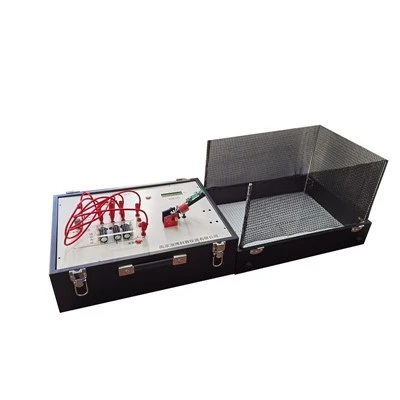
If you’re looking to improve your workplace’s safety, comfort, and productivity, let’s talk. We can walk through your space, listen to your team’s challenges, and find the auxiliary equipment that fits your needs, no matter how big or small.
Mechanical instruments References
- Occupational Safety and Health Administration. (2022). Air Quality in the Workplace: Guidelines for Controlling Contaminants. U.S. Department of Labor.
- National Institute for Occupational Safety and Health. (2021). Noise Exposure in Manufacturing: Impacts and Mitigation Strategies. Centers for Disease Control and Prevention.
- Ergonomics Society. (2020). Practical Guide to Ergonomic Workplace Design for Small and Medium Enterprises.
- World Health Organization. (2019). Noise Pollution and Health: A Review of Current Evidence. WHO Regional Office for Europe.
- International Organization for Standardization. (2022). ISO 14121: Safety of Machinery—Risk Assessment. ISO.
Nanjing Longbow Scientific&Educational Instrument Co., Ltd.
As one of the most professional auxiliary equipment manufacturers and suppliers in China, we’re featured by quality products and good service. Please rest assured to buy customized auxiliary equipment from our factory. If you have any enquiry about pricelist, please feel free to email us.
Address: Room D, 22th floor, No.305, North Jiangdong Road, Nanjing,Jiangsu Province, China
E-mail: 79425380@qq.com
WebSite: https://www.lb-physics.com/
