Can Sodar be used for forestry research? Sodar
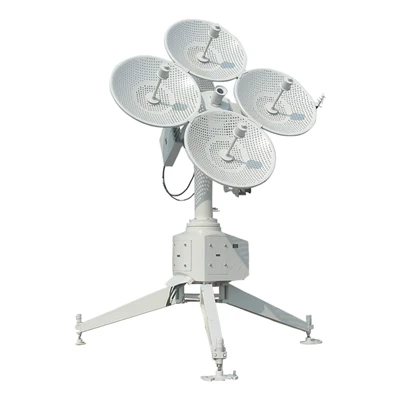
Hey there! I’m from a Sodar supplier, and I’ve been getting a bunch of questions lately about whether Sodar can be used for forestry research. So, I thought I’d dive into this topic and share some insights.
First off, let’s talk about what Sodar is. Sodar, short for Sound Detection and Ranging, is a remote – sensing technology that uses sound waves to measure the vertical profile of the atmosphere. It’s kinda like radar but uses sound instead of radio waves. It can detect various atmospheric parameters such as wind speed, wind direction, and temperature gradients at different altitudes.
Now, let’s get into the details of how Sodar can be a game – changer in forestry research.
Understanding the microclimate in forests
One of the key aspects of forest ecology is the microclimate. Different tree species have specific temperature and humidity requirements for growth, survival, and reproduction. Sodar can help us monitor the vertical profile of temperature and humidity within the forest canopy. By analyzing the data collected by Sodar, researchers can figure out how these factors change at different heights above the forest floor.
For example, in a tall old – growth forest, the temperature near the ground might be cooler and more humid compared to the upper canopy. This difference can affect the distribution of understory plants and the behavior of insects and small animals. With Sodar, we can get a clear picture of these micro – environmental variations, which is super important for understanding the overall health and biodiversity of the forest.
Wind patterns in forests
Wind plays a crucial role in forest ecosystems. It affects seed dispersal, pollination, and even the structure and health of trees. Strong winds can cause tree damage, while gentle breezes can help in the movement of pollen and seeds over long distances.
Sodar can accurately measure wind speed and direction at different altitudes within the forest. This data can be used to model how wind moves through the forest canopy. For instance, in a forest with a dense canopy, wind flow can be complex. The trees can cause the wind to split, swirl, and create turbulence. By understanding these wind patterns, we can predict how far seeds will be carried by the wind, which is essential for forest regeneration.
In addition, wind patterns can also influence the spread of forest fires. If we know how the wind is blowing at different heights in the forest, we can better predict the direction and intensity of a fire. This can help forest managers in developing effective fire management strategies.
Forest canopy structure and airflow
The structure of the forest canopy has a big impact on airflow. Different tree species have different canopy shapes and sizes, which can affect how air moves through the forest. Sodar can provide information about how the canopy interacts with the air above it.
By measuring the wind shear (the change in wind speed and direction with height) above the forest canopy, we can infer the density and structure of the canopy below. A dense canopy will cause more wind shear compared to a more open canopy. This information is valuable for forest inventory, as it can help estimate the volume of timber in a forest without the need for extensive on – the – ground surveys.
Monitoring forest health through atmospheric changes
A healthy forest has a relatively stable microclimate. Any changes in the forest, such as disease, pest infestations, or deforestation, can lead to changes in the atmospheric conditions. Sodar can act as an early warning system in this regard.
For example, if a certain area of the forest is being affected by a pest outbreak, the trees may start to lose their leaves, which can change the way the forest interacts with the atmosphere. This can result in changes in temperature, humidity, and wind patterns that can be detected by Sodar. By continuously monitoring these atmospheric parameters, we can detect potential threats to forest health before the damage becomes too severe.
Data collection and analysis
One of the great things about Sodar is that it can collect data continuously over long periods. This is a huge advantage compared to traditional on – the – ground methods, which are often limited in time and space. The data collected by Sodar can be integrated with other data sources, such as satellite imagery and ground – based sensors, to get a more comprehensive view of the forest ecosystem.
The data can be analyzed using advanced statistical models and machine – learning algorithms. These tools can help in identifying trends, patterns, and relationships in the data. For example, we can use the data to predict how a forest will respond to climate change over time.
Challenges and limitations
Of course, like any technology, Sodar also has its limitations. One of the main challenges is the cost of installation and maintenance. Setting up a Sodar system requires a significant investment, and regular maintenance is needed to ensure accurate data collection.
Another limitation is the impact of environmental factors on Sodar performance. Heavy rain, snow, or extreme temperatures can affect the accuracy of the sound waves used by Sodar. Also, in dense forests, the sound waves may be blocked or scattered by the trees, which can limit the range and accuracy of the measurements.
However, with ongoing technological advancements, these limitations are being addressed. Newer Sodar models are more robust, cost – effective, and less affected by environmental conditions.
Why choose our Sodar for forestry research
As a Sodar supplier, we offer high – quality Sodar systems that are specifically designed to meet the needs of forestry research. Our Sodar systems have a high – resolution data collection capability, which allows for detailed analysis of the atmospheric parameters within the forest.
We also provide excellent customer support. Our team of experts can help you with the installation, calibration, and maintenance of the Sodar system. We understand the unique challenges of forestry research and can work with you to customize the system to fit your specific requirements.
In addition, our Sodar systems are integrated with modern data – analysis software. This software makes it easy to visualize and analyze the data collected by the Sodar, even if you’re not a data expert.
If you’re involved in forestry research and are looking for a reliable way to monitor the atmospheric conditions in forests, we strongly recommend considering our Sodar systems. It can provide you with valuable insights that can contribute to better forest management and conservation.

If you’re interested in learning more about our Sodar systems or have any questions regarding their use in forestry research, don’t hesitate to reach out. We’re always happy to have a chat and discuss how our technology can benefit your research projects.
Meteorological Instruments References
- "The Role of Micrometeorology in Forest Ecosystems" – Journal of Forest Ecology
- "Remote Sensing Technologies for Forest Monitoring" – International Journal of Remote Sensing
- "Wind and Forest Dynamics" – Annals of Forest Science
Tianjin Blooming Technology Ltd.
Address: Main Building, No. 10 Wuhua Road, Huayuan Industrial Zone, Binhai High-tech Zone, Tianjin, China
E-mail: sales@blooming-tech.com
WebSite: https://www.blooming-tech.net/
