If you’ve ever stopped to marvel at the delicate, layered walls of a limestone cave, polished countertops in a modern kitchen, or even the soft, matte pigment in a watercolor set, chances are you’ve encountered calcite in one of its many forms. As a calcite powder supplier, I get asked about this mineral’s properties almost every day—but one question comes up more than any other: “What is the hardness of calcite powder?” It’s a simple question on the surface, but the answer digs into why calcite is such a versatile material, how its powder form differs from raw rock, and why that hardness matters for everything from construction materials to cosmetics. Calcite Powder
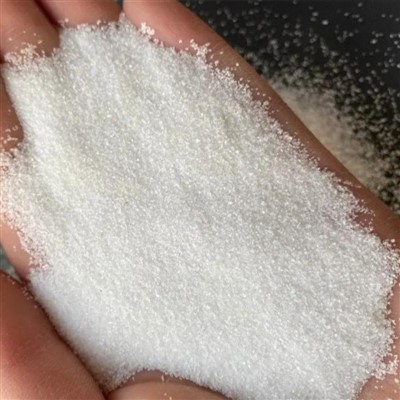
First, let’s start with the basics. Hardness, in mineral terms, is not just how “scratch-resistant” a material is for crafts or products—it’s a standardized measure of a mineral’s ability to resist abrasion, indentation, or scratching. The most common scale for this is the Mohs Hardness Scale, developed by German mineralogist Friedrich Mohs in 1822, where minerals are ranked from 1 (the softest, talc) to 10 (the hardest, diamond). When people ask about calcite’s hardness, I always first reference its place on that scale: a consistent 3. That’s a number that might sound low until you put it in context. For example, gypsum is a 2, so calcite is just slightly harder than the plaster you might use to patch a wall, and much softer than quartz (7) or steel (around 5.5 on the same scale). Raw calcite rock has that same 3 Mohs hardness, right? But when you grind it into powder, does that change? That’s where the nuance comes in, and where I get to talk about the work my team does to process calcite for different uses.
When we mine raw calcite from our quarry, the first step is sorting out impure chunks—any rock with traces of quartz, clay, or other minerals that would weaken the powder’s consistency. Then we crush it into coarse granules, and grind those granules to a fine powder, sifting and testing every batch to get the particle size and purity our clients need. Through every step, the inherent hardness of calcite (Mohs 3) doesn’t change—but how that hardness behaves in the powder form does. A common misconception is that a powder’s hardness is the same as the raw mineral, but in practice, when you use calcite powder in a product, its hardness plays out differently based on particle size, shape, and how it’s mixed with other materials.
Let me break that down with examples that our clients deal with every day. Take paint and coatings, for instance. Many architectural paint brands add calcite powder as a filler to cut costs, improve coverage, and boost paint’s durability. At a particle size of 10 to 20 microns, our calcite powder (still with that Mohs 3 hardness) adds a slight abrasion resistance to the paint film, meaning scuffs from shoes or furniture don’t damage the wall as easily as they would with a softer filler. But because calcite is only Mohs 3, it’s not so hard that it wears down paint rollers or spray nozzles—something a harder filler like quartz (Mohs 7) would definitely do. That’s the sweet spot for calcite powder’s hardness: it’s hard enough to add functional strength, but soft enough to process and work with easily.
Another big use for our calcite powder is in plastics and rubber. Manufacturers use it as a functional filler to improve tensile strength, stiffness, and dimensional stability in products like PVC pipes, garden hoses, and even plastic toys. When we supply powder for this industry, we grind it to a finer size (often 2 to 5 microns) to ensure it disperses evenly through the polymer. The Mohs 3 hardness of the calcite particles makes the final plastic product less flexible than pure plastic, which is ideal for pipes that need to hold their shape, but not so stiff that they crack easily in cold weather. I’ve had a few plastic plant clients tell us they switched to our calcite powder from talc (Mohs 1) because talc made their products too soft and prone to scratching, and a silica filler (Mohs 7) made the plastic too brittle. Calcite’s Mohs 3 hits that perfect middle ground.
Now, what about more niche uses? We supply calcite powder to the agricultural industry too, for soil amendment and livestock feed additives. In this case, hardness is less about the final product’s strength and more about how the powder interacts with the soil or animal digestive tracts. Calcite is calcium carbonate, so it’s great for raising soil pH and providing calcium for crops—but its soft, Mohs 3 hardness means it grinds easily when mixed into soil, so it doesn’t clump up or create uneven patches. For livestock, the soft powder is easily digested, unlike harder mineral supplements that can cause digestive irritation.
Of course, no conversation about calcite hardness would be complete without addressing the factors that can slightly alter its performance, even if its Mohs rating stays 3. Purity is a big one. If a calcite sample has impurities like dolomite (another carbonate mineral with a Mohs hardness of 3.5 to 4), that small difference in hardness can make the powder slightly more abrasive than pure calcite. That’s why our quality control team tests every batch for purity using X-ray diffraction, so we can inform our clients exactly what hardness to expect—whether they need a very consistent pure calcite for cosmetics, or a slightly harder blend for a construction adhesive. Particle size also affects how hardness is experienced in use. A coarse calcite powder (50 to 100 microns) will feel more abrasive when rubbed between your fingers than a fine powder (1 to 5 microns), even though both have the same inherent Mohs hardness. That’s something we communicate clearly to clients in the paper industry, for example, where coarse calcite is used to coat paper to make it smooth and bright, and fine calcite is used as a filler to improve printability.
As a supplier, I’ve learned that most clients don’t just need a number—they need to understand how that hardness will impact their end product. Last year, I worked with a startup that was making natural face powders, and they initially asked for a powder with a hardness of 2, thinking it would be gentler on skin. But after testing our calcite powder (Mohs 3) alongside their original talc-based product, they found that calcite’s slightly higher hardness meant the face powder didn’t streak or wear off after a few hours, while talc was too soft and became patchy. That’s the kind of on-the-ground testing and client collaboration that makes answering “what is the hardness of calcite powder” so much more meaningful than just citing a Mohs number.
It’s also worth addressing a common mistake I see in online articles: they often mix up raw calcite rock’s hardness with powder hardness, or omit how purity and particle size change the practical performance. I’ve had clients reach out after reading blog posts that claimed calcite powder is “harder than steel” or “so soft it can be scratched by a fingernail”—both are wrong, of course. A fingernail has a Mohs hardness of 2.5, so pure calcite (Mohs 3) will not be scratched by a fingernail, which is a quick way to test for it. Steel nail is around 5.5, so a steel nail will definitely scratch calcite. That small test is something I recommend to anyone handling calcite powder for the first time, to confirm its properties before integrating it into their production.
So, to wrap this up, the hardness of calcite powder isn’t a one-size-fits-all answer. At its core, it has a consistent Mohs hardness of 3, a value that makes it one of the most versatile industrial minerals on the market. Whether you’re using it as a filler in paint, a strengthening agent in plastics, a soil amendment in agriculture, or an ingredient in cosmetics, calcite’s hardness hits that perfect balance between soft enough to process easily and hard enough to add functional, long-lasting properties. As a calcite powder supplier, my team and I don’t just sell a mineral—we provide a material that’s been processed, tested, and tailored to meet specific hardness needs for every client, because we know that getting that number right can make or break a product.

If you’re working on a project that requires calcite powder, and you have questions about its hardness, purity, particle size, or any other property, don’t hesitate to reach out to our team to discuss your needs. We’re always happy to share sample batches and technical data to make sure you get exactly the right calcite powder for your application.
Slaked Lime Powder References
- Skinner, B. J., & Porter, S. C. (2021). The Physical Properties of Minerals. John Wiley & Sons.
- Mohs, F. (1822). Versuch einer Elementar-Mineralogie. Leopold Voss.
- Carver, R. E. (1971). Sedimentary Rocks and Their Origins. John Wiley & Sons.
- Taylor, H. F. W. (1997). Cement Chemistry. Thomas Telford.
Chaohu Jirun Energy Conservation and Environmental Protection Technology Co., Ltd.
We’re well-known as one of the leading calcite powder manufacturers and suppliers in China, also support customized service. Welcome to wholesale high quality calcite powder in stock here from our factory. If you have any enquiry about pricelist, please feel free to email us.
Address: No. 9, north of the intersection of Weihai Road and Weili Avenue, within the industrial park of Yinping Town, Chaohu City, Hefei City, Anhui Province.
E-mail: 13305654485@163.com
WebSite: https://www.chaohujirun.com/
